

1. WE’RE ON LISTS
Well, some anyway. The one list Chicago didn’t make this year is Food and Wine’s Best New Chefs. But we did make Bon Appetit’s 20 Best New Restaurants—that is, Feld got a spot on the list:
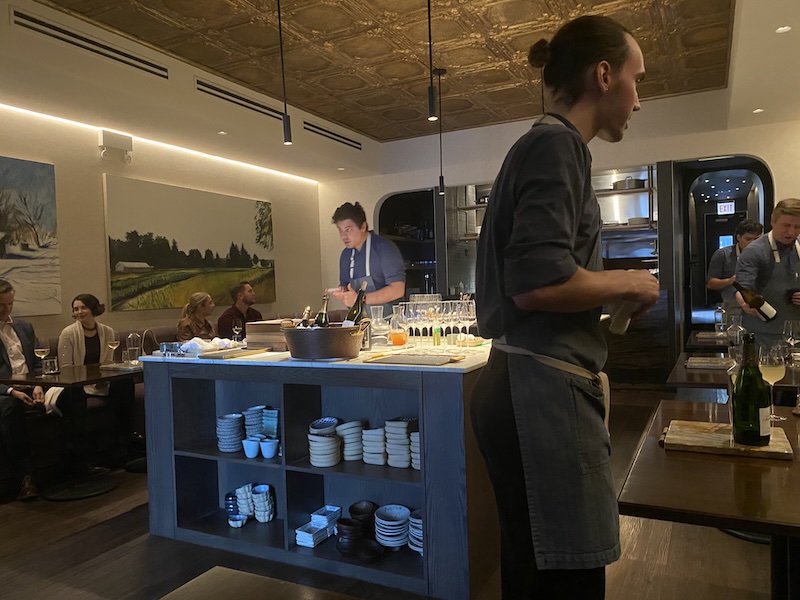
Early on, Feld became Chicago’s most divisive restaurant, a flash point for critics of highfalutin many-course tasting menus. Potashnick took skepticism as an invitation to share his process, bringing his roughly 100,000 TikTok followers behind the scenes and on frequent farm trips, offering a glimpse of his team’s meticulous operation… Dinner at Feld feels like a night of theater, with 20-plus courses unfurling over two hours, a dynamic dinner-in-the-round that is as engaging as it is earnest.
I think that’s not strictly accurate—the social media mostly predated the opening and the rough reviews of the first couple of months—but that last sentence seems dead on about the experience you have there.
Meanwhile, the New York Times published its annual list of the 50 best places to eat in America right now, and Chicago got two spots on the list. One is not a surprise:
The chef Norman Fenton is serious about process, whether it’s spherification or nixtimalization, both of which make their way to the plate across 12 or so exhilarating courses. He’s also not afraid of some fun (or real spice). The cheffed-up versions of Latin dishes — a chicken liver taco dorado, or a pumpernickel quesadilla with black garlic — are ingenious, but retain the elemental appeal of their traditional antecedents.
Right, it’s Mexican tasting menu Cariño. The other is probably more of a surprise to many, as it requires making your way to 99th street in Beverly:
One of the most irresistible Southern dishes in the country right now can be found in the Beverly neighborhood of Chicago, about 12 miles south of the Loop and 530 miles north of Memphis. It’s the oxtail gumbo at Sanders BBQ, a soup-stew special whose spoon-coating gravy one can only hope is eventually available by the pint.
2. A BLOCK OF STEAK
I find it hard to care about reviewing steakhouses, and it’s not surprising that they end up being more a chronicle of the expensive excess on display than a deep dive into how a slice of muscle gets prepared. Here’s John Kessler on The Alston:
Welcome to the Alston, which stretches an entire city block and is more warren than restaurant, an ever-unfurling maze of open bar seating and secluded dining corners, of wine cellars and secret chambers, of curtains you duck behind and bathrooms you have to search for, of a freakin’ members-only club, and of patios upon patios, some for the members and some for us, the hoi polloi. We can wave to each other. Isn’t life grand?
It certainly is at the Alston, the most batshit display of dining opulence in this city since the Boka Restaurant Group attempted a similar move two years ago with its ill-fated Le Select.
3. THE FALL
Speaking of late summer and fall produce at Feld, it’s one of the places that John Kessler talks about in his column on the best produce of this time of year:
This is without question my favorite season for eating, with the last of the high summer produce piling up (no need to get to the farmers market early for the best tomatoes) and the fall crops coming in. It’s also my favorite season for dining out because those chefs who are most attuned to the delights of the shoulder season are getting creative, inspired, and weird in all the right ways. Now, people, now is the best time to go out for a Wednesday or Thursday dinner in any restaurant with a daily menu, a day when you can avoid the crowds and score the best of limited ingredients.
Alas, he leaves off one of the best seasonal dishes in town: the Overpriced Tomato at Daisies.
4. CRAWLING TO CREEPIES
Creepies is the odd name of the new restaurant from the Poseys of Elske fame, and Michael Nagrant is the first to get there. He is wowed:
The “populis” [wine] pairs well with the rich roast chicken in liver wine sauce, which like the bird from Maxwell’s Trading has a mind-blowing juicy interior/crisp skin contrast making it one of those “death row” chicken meals all the chefs describe going as their preferred last bite.
If I had to choose one dish to end my time on this mortal coil, it might be Creepies’ gougeres rife with drippy brie and licked with local honey. Savory, salty and sweet, we ordered a second batch immediately after killing the first.
5. OUT OF THE CELLAR
Grimod returns to Cellar Door Provisions and describes the long-running spot’s nature now:
Chef Ethan Pikas’s longstanding commitment to local sourcing and fermentation—bolstered by the thoughtful incorporation of ingredients (like seafood and olive oil) from further afield and his wholehearted collaboration with new chef de cuisine Alex Cochran—had finally borne fruit. Years of doing things in an impossibly hard, almost self-defeating manner had suddenly yielded to a kind of equilibrium. The kitchen, with seeming effortlessness, was now crafting dish after dish at a level of creativity and deliciousness (not to mention accessibility) almost without equal in Chicago.
6. BEAUCOUP THAI
Titus Ruscitti goes to Coup de Thai, a Chicago outpost of an LA Thai restaurant in Lakeview:
Coup de Thai comes to us from Los Gatos California (homebase of Netflix). It opened at the end of July and started gaining buzz almost immediately. We visited on a Friday night in the beginning of August and the entire neighborhood was buzzing with people from all walks of life and that spilled over into the restaurant. Coup de Thai describes themselves as a modern southern Thai restaurant – it’s currently byob but that may change. The menu is smaller and made up of two sections 1) The Opening Act and 2) Center Stage. When I visit a restaurant like this I like to find menu items that stand out in terms of dishes you don’t really see elsewhere and I found a couple immediately in the ‘Dragon Balls’ and the ‘Tom Yum Ceviche’. First out were the Dragon Balls which are described on the menu as “spicy chicken balls fried with mint, shallot, green onion, cilantro, kafir lime leaves, and salad.” This appetizer is actually at the center of a lawsuit with their California location that alleges this dish was too spicy and caused permanent damage to a customer – sounds a bit like a Karen’s claim but I won’t pretend to know the whole story. What I do know is the version served at this location was far from spicy. They were nicely spiced and I liked the fresh herbs that came with them and the dipping sauce too but they weren’t spicy at all.
7. LIVE NOODLES
Mike Sula has a piece at the Reader about a pop-up dinner making Thai noodles, and all I can think is what a sensation this would have been on LTHForum twenty years ago—there would have been people racing to translate the menus:
“Let’s set up a noodle pot in front of the alley,” announces a typical weekly menu, posted each Saturday on Facebook with a single, classic-but-uncommon-for-Chicago noodle soup and its variable components and supplements. “Updated menu for Thai people who are far from home. Intense taste. It’s like eating in Thailand. Let’s get rid of homesickness.”
Pramereothai “Aomjai” Phumpardit, aka Mae (or “mother”) Aomjai, drops each week’s menu only in Thai, and she serves it only on Tuesdays and Wednesdays. The “alley” is an Albany Park storefront with a vintage green-and-orange pay phone hanging in the window. Inside, bright-blue Pepsi-branded vinyl-covered tables sit before an open kitchen where she ladles nostalgia with orange, blue, and purple plastic flowers blooming from her cap like a beacon from home.
8. CONTAINER LUNCH
Dennis Lee goes to a “global comfort food” spot in a container in Boxville, the south side shopping area where The Hot Dog Box (RIP) came from:
Daniel’s Test Kitchen is run by none other than the namesake Daniel Will, who told me via Instagram that he grew up as an adoptee in a large family.
His specialty is global comfort food, and the food menu is quite small, with just four items. Those would be the chicken and waffles on a stick, a ratatouille Pop-Tart, Nigerian beef empanada, and the star of the show, the jollof rice balls.
Will is the sole owner and operator, and originally comes from a tech sales background, working for high-profile companies like Yelp. After having been laid-off a few years back, he moved from San Francisco to Chicago, where he made Bronzeville his home. He finally tackled his passion for cooking head-on by starting his business in the neighborhood. He’s self-taught thanks to Food Network and the internet (with the right channels, YouTube can be quite the teacher, I’ve learned).
9. HERBY RIDES AGAIN
The Infatuation goes to Chicago’s one and only Lao restaurant, Lao Der:
Herby sausages and peppery jerky are seasoned perfectly, and taste even better with BYOBeer. Salads with fermented pork or crab paste are an exciting maximalist whirlwind of umami, spicy, and tangy flavors. And their khao piek sen is satisfying from the first spoonful of chicken broth to the final slurp of chewy noodles. At Lao Der, Lao food finds a long-awaited, more permanent home in Chicago, and we can’t wait to come over again.
10. ANIMAL PROTEIN STORIES
More than a year ago I was interviewed by a crew from WTTW about different aspects of our food scene. I was just wondering if I had missed the airing of this thing when I got an email from WTTW. A new season of Chicago Stories begins in late September, and one called Iconic Foods will air on October 17th; go here to see the trailer and the airdates.
11. AVEC HAUTE-BOIS
A quote from my upcoming book, from David Barriball, who’s an executive with One Off Hospitality:
I don’t think, say, avec Nashville is what we’ll do right now, but you could certainly name five towns around the Chicagoland area that are bustling communities that would love to have an avec right in the middle of them.
And that’s precisely what’s happening—an avec is opening in Highwood. Will it work away from downtown? Will people in the burbs eat like that? I think if anything might bring the West Loop to the North Shore, avec would be it. Daniel Hautzinger tells more about it at WTTW.
12. HIDDEN OVER
I never went to the Hidden Cove but I always liked the karaoke bar’s vintage sign on Lincoln Ave. Alas, it closed recently, and Block Club went on one of the last nights to mark its passing.
13. LISTEN UP
I was talking about the end stages of food media with an old friend in the business, and he brought up my recent comment about podcasts being the best way to be in contact with local restaurants now. As if to prove my point, I just got a press release about a place doing something new: the charming Spinning J’s Bakery and Soda Fountain will mark its 10th anniversary in November with a limited-run podcast about its history. This may seem a bit improbable, not exactly Dylan Trotter doing the story of his dad or something, but owner Dinah Grossman has a degree in Creative Writing and English Literature and a background in Documentary Studies, so she’s found a interesting outlet for all that in her quaint Humboldt Park lunch and pie shop. I’ll announce it when it goes live in November.
Joiners talk to John Zadikoff of the Cornerstone restaurant group.
Supper With Sylvia talks to Robert Garvey, founder of Robert’s Pizza.
At The Chef’s Cut, they talk late season produce, pop-ups and more.
At The Dining Table, David Manilow talks omakase with Mari Katsumura and Adam Sindler of Sho. Both come from families that had legendary Asian restaurants (her, Yoshi; him, Kamehachi).
At The Dish from Chicago Magazine, John Kessler talks about where to go in his neighborhood, Bucktown.
WHAT MIKE ATE
When I wrote my profile of Feld in January, based on a mid-December visit, I observed:
I think Feld would seem a very different experience in August, with tomatoes and corn and basil on the menu.
I planned to go back around this time of year to test my own theory—and in short, true enough about the seasonal produce. (I barely made it; the recent cold evenings made this likely the last week for tomatoes and corn.) But that’s not the only thing that made early September strikingly different from December.
I was generally pleased with that earlier meal, even though I joked a few times to others about it being Jake’s House of Hakurei Turnips. A place so serious about in-season produce was going to be heavily reliant on turnips, sunchokes, and other such winter vegetables in December. So my memory of that meal is mostly of root vegetables in something like dashi, or a blob of something. (See the pics in my profile.) When another food writer asked me about it in early spring, I advised him to think about what would be in the farmers markets, and pick when to go based on what he liked that would be in season.
So here we were in what is, for me, peak season of so many of my favorite things—tomatoes, corn, peaches and blackberries and melons. All that was anticipated. What I didn’t anticipate was that the restaurant, which had seemed promising ten months ago—a nice reviewer’s way of saying good but not great—would have matured so much in the interim. And is—let me see if I can concoct a soundbite to counteract some past ones from its first few weeks—suddenly one of the best restaurants in Chicago, one that I look forward to returning to as soon as I can.
The meal started with what they call The Drop. That is, they drop a bunch of things at once to start the meal. “A bunch” was about four when I went in December; now it’s ten. Which is, frankly, dizzying, too many for them to describe and allow me to recall what they all are. But having been to plenty of tasting menus where the first few bites—and they are usually no bigger than bites—are parceled out one by one, meaning that after half an hour and at least one glass of wine, you’ve consumed about half a candy bar in volume, dropping ten things on me right at the start feels bountiful by comparison.
What were the bites? Looking over the menu to jigger my memory, there was a l’Arpege egg, filled with yolk, a savory broth—and, unusally, some hearty black Holstein beans; there was corn, seasoned with grill flavor, served with basil in a broth of some sort; there was lamb tartare on a tortilla, and gazpacho, which I can’t say I remember but I’m sure just looked like the first of many tomato dishes that evening.
What wowed us—certainly won my wife over in the first batch of bites—was, where December had seemed like a lot of things made in roughly the same way, everything here was strikingly different, in techniques used and in how they appealed to our taste buds. The corn was smoky and put a smile of familiarity on your face, but there was nothing familiar about the shiso taco or the husk cherries which popped when you bit into them. The sunflower seed tart was woodsy, the lamb tartare was (obviously) meaty, the different types of melons with different types of ham were a bit of both.
What followed, followed in the same path—like they had learned a dozen new ways to cook things since I was last there, and wanted us to know about all of them. There would be cherry tomatoes from Froggy Meadow served with a quenelle of savory ice cream, and sliced tomatoes in a (savory, in a different way) glaze that seemed like both balsamic vinegar and the bone marrow spread over the Overpriced Tomato at Daisies.
Despite Jake’s disavowal of overly creamy crowdpleasers in my piece, there were sliced peaches in a poblano cream sauce, and albacore cooked in butter with a dash of wasabi. And then there was the gargoulliou, the Michel Bras concept dish which tends to mean “everything in season at the moment.” Here it meant all the different kinds of peppers you can get right now, all prepared in different ways—a grilled shishito, a clump of pepper tempura-fried, and so on. If the biggest criticism I had in December was that dishes seemed repetitive—well, that’s not a problem any more. I can’t think of the last meal that rang so many different notes over its many courses—particularly notable as we saw, say, tomatoes for the second or third time that night, but each time in a markedly different way.
Dessert was more of the same, in the sense of every course presenting something different—of course the malted ice cream came from grain malted in-house!—and then there’s the final piece of the communal experience in the patio out back, which for the second time I will not spoil for first-timers. If early on Jake, with his talk about “relationship to table” and so on, seemed to be suggesting that they were doing something very different from other restaurants, which I don’t think was ever true (and which, to be fair, he said back then was not his intention of claiming), now I feel like their hyperfocus on this or that seasonal ingredient, one after another, does stand a bit apart. Other people serve corn, sometimes from the same farmer (Kankakee Valley Homestead) no doubt, but a corn dish at Feld puts a spotlight on the essential nature of corn in a way that seems beyond what anyone else does. Or they might do it a few times, but Feld does it for 27 courses straight. Corn, or tomatoes or whatever, is treated with such focus and devotion that it seems almost sacred, and magical. Which, of course, it is—food comes from the earth, and tastes this good. What in our lives is more magical than that?
So: Feld, at a little over a year, is coming into its own as one of the best restaurants in town, I feel firmly. More than that, at a time when “tasting menus” are popping up like popcorn all over town, Feld seems the first in a while that has a firm concept of its own, the way Schwa or Elizabeth did when they were new. I’ve rattled on too long to dwell upon sommelier Nathan Ducker’s infectious enthusiasm or the general warmth of the service, but just accept that they are part of what makes it so exceptional overall. Go as soon as you can, so you can start planning the next visit after that.